Friday, 26 April 2013

Introducing "suspended coffee" for neighbourhood community

India has long tradition of providing the food for down trodden people who are unable to fetch a meal, as a part of charity.   However, this is sporadic and not available all the days and all the places.

In europe, the concept of "suspended coffee" is becoming popular which ensures that a meal of coffee is available free of cost to those who can not afford to buy it.

Can it be replicated in India? In the neighbourhood of industries.  There could be contribution both the industries as part of CSR, employees and other individuals as well.

Please respond if you come to know about such an initiative in India.  Copy of a new item is given below:

Dinesh Agrawal


EU Embraces 'Suspended Coffee': Pay It Forward With A Cup Of Joe 
by Sylvia Poggioli
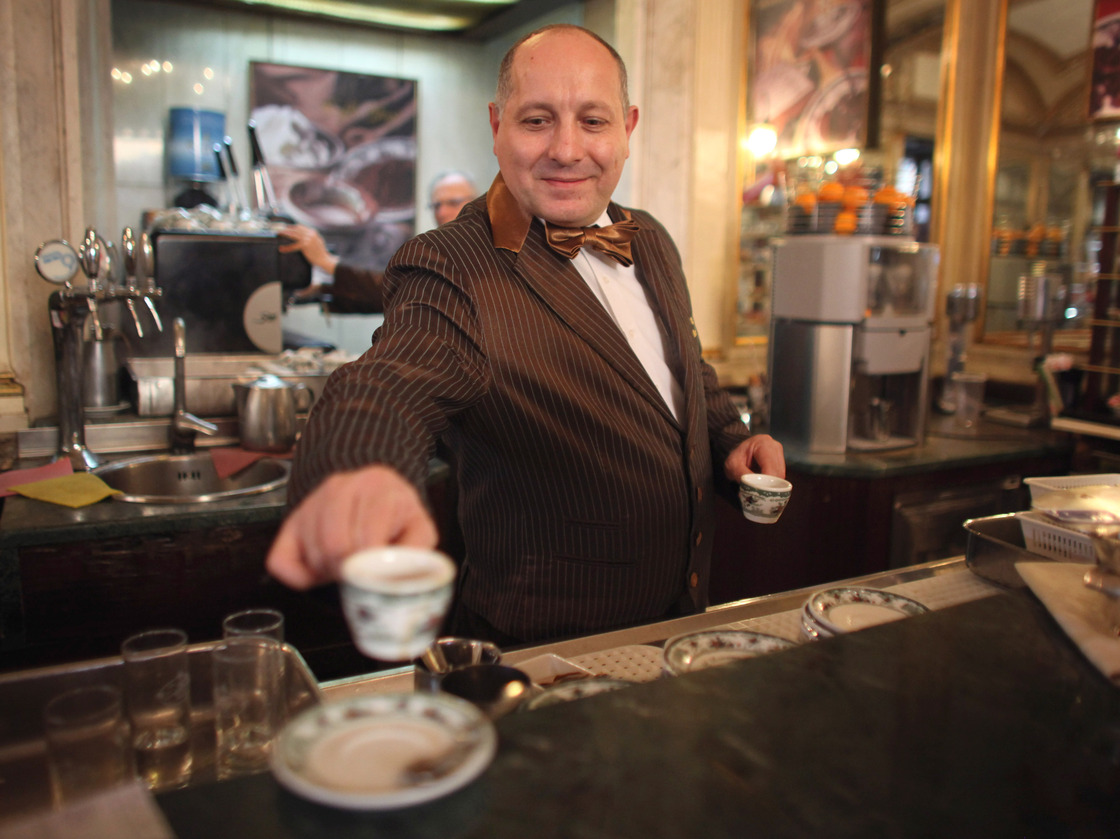
A barista serves coffee at a cafe in Naples, Italy. The Italian city's long-standing tradition of buying a cup for a less-fortunate stranger is now spreading across Europe.
A barista serves coffee at a cafe in Naples, Italy. The Italian city's long-standing tradition of buying a cup for a less-fortunate stranger is now spreading across Europe.
Tough economic times and growing poverty in much of Europe are reviving a humble tradition that began some one-hundred years ago in the Italian city of Naples. It's called caffè sospeso — "suspended coffee": A customer pays in advance for a person who cannot afford a cup of coffee.
The Neapolitan writer Luciano de Crescenzo used the tradition as the title of one of his books, Caffè sospeso : Saggezza quotidiana in piccoli sorsi ("Suspended coffee: Daily wisdom in small sips").
"It was a beautiful custom," he recalls. "When a person who had a break of good luck entered a cafe and ordered a cup of coffee, he didn't pay just for one, but for two cups, allowing someone less fortunate who entered later to have a cup of coffee for free."
The barista would keep a log, and when someone popped his head in the doorway of the cafe and asked, "Is there anything suspended?" the barista would nod and serve him a cup of coffee ... for free.
It's an elegant way to show generosity: an act of charity in which donors and recipients never meet each other, the donor doesn't show off and the recipient doesn't have to show gratitude.
The writer says the tradition is part of the city's philosophy of life. "In other words, it was a cup of coffee," de Crescenzo says, "offered to the rest of humankind." It was a time, he adds, when there were more customers who were poor than those who were well-off.
It's fitting that the tradition started in Naples, a city that prides itself on having the best coffee in Italy. And in a country where the first coffeehouse in Europe opened in 1683 (in Venice), that is no small claim.
Before the likes of Gaggia and Cimbali started producing the modern commercial espresso machines, Italians made coffee at home on the stovetop with a coffee maker known as a Napoletana .
Naples and coffee are inseparable, but the caffè sospeso tradition waned as Italy entered the boom years of postwar reconstruction and La Dolce Vita. For decades, the custom was confined mainly to the Christmas season.
Now, it's made a comeback. Two years ago, with the eurozone crisis already raging, unemployment rising and small businesses closing on a daily basis, more and more Italians could no longer afford the national beverage — an espresso or a cappuccino. (According to the International Coffee Organization , which represents 44 coffee exporting countries, Italian per capita annual consumption of coffee has dropped to 5.6 kilograms, the lowest level in the past six years.)
Then someone remembered the old Neapolitan custom. So several nongovernmental organizations got together and — with the support of Naples Mayor Luigi de Magistris — Dec.10 was formally declared "Suspended Coffee Day."
The practice is now spreading to other crisis-ravaged parts of Europe.
In Bulgaria, the European Union's poorest country, where several desperate people have set themselves on fire in recent months, more than 150 cafes have joined an initiative modeled on the Neapolitan "suspended coffee" tradition.
In crisis-wracked Spain, a young man from Barcelona, Gonzalo Sapina, in a few short weeks started a network called Cafes Pendientes ("pending coffees") and promoted the initiative among numerous coffee shops.
In France, several cafes now carry the logo "cafe en attente" ("waiting coffee").
And there is even a site that lists establishments that have joined the "suspended coffee" initiative — the countries range from the U.K. and Ireland and Hungary to Australia and Canada.
The prepaid cup of coffee has become a symbol of grass-roots social solidarity at a time of mounting poverty in what, until recently, were affluent Western societies.
But now, back to Naples, where coffee is not a luxury but is considered, more or less, a basic human right.

Saturday, 20 April 2013

Fruit Plantation in Green Belt

More than 15 year back, travelling in a village, I was told that 5 fruit bearing trees could provide sustenance to a poor family.  I was wondering why industries plant tall pollution tolerant species trees in the name of  when one could grow fruit orchard in the green belt around the industries, which is a mandatory requirement under Environment Clearance.  There is a futile feeling that fruit orchard will obstruct the functioning and safety of plant or township.  
There are added opportunities of economic integration to involve employees cooperative or NGOs or local community group, which will deploy the local people for maintaining the fruit orchard and selling the fruits and will create livelihood opportunities.  This could be the best opportunity for social, environmental and economic integration with the local economy and communities.

Reliance industries was probably the first to do it in the green belt area and became one of the biggest mango producer. 

Reliance, Essar and Sanghi groups growing mango on barren land


Companies, which are better known for largest single-location refineries and cement plant, are also among the leading mango producers.
NEW DELHI: Big industrial projects are often blamed for taking land, water and labour away from agriculture, but in Gujarat, some big industrialists have done the opposite - turned acres of barren land into mango orchards.
Reliance Industries, Essar Group and Sanghi Industries, which are better known for their largest single-location refineries and cement plant, are also among the country's leading mango producers.
It's not just that they opted for mango plantation instead of low-maintenance trees to meet their commitment for creating a green belt around their plants, but they are constantly working on innovative practices to improve productivity and quality. In fact, mangoes from some of the largest industrial houses' orchards are organic.
Reliance Industries, which grows 127 varieties of mango in a 600-acre green belt at its Jamnagar refinery complex, looks to beat Israel and Brazil in productivity, a top company official said. These countries produce 8-10 tonnes of mango per acre against India's average of 3-4 tonnes.
Reliance has named its mango orchard Dhirubhai Ambani Lakhibag Amrayee after a mango grove Mughal Emperor Akbar created in the 16th century. Akbar had planted 1 lakh mango trees in the estate he called Lakhibag at Darbhanga in Bihar; the Ambani Lakhibag has more than 1,38,000 trees.
Parimal Nathwani, group president (corporate affairs) at Reliance Industries, says the company's Jamnagar mango will herald a revolution in Indian horticulture.
Reliance encourages farmers to visit its orchard and learn from its innovative practices. It also distributes 1 lakh free saplings to farmers every year, says Nathwani, who was a close confidant of Dhirubhai Ambani.
The Ruias of Essar Group, meanwhile, produced 80 tonnes of mango last season compared with less than seven tonnes in 2009. The group plans to plant 12,000 more trees over 60 acres of additional land surrounding its Vadinar refinery in Jamnagar. A company spokesperson said Essar Agrotech has applied for Global GAP certification for exports.
What is noteworthy is that these firms have their orchards in not-so-friendly areas. Alok Sanghi of Sanghi Industries, which operates one of the world's largest single-stream cement plants in Kutch district, says the group decided to create a mango orchard to showcase that even sweet mango can be grown in an arid region like coastal Kutch.


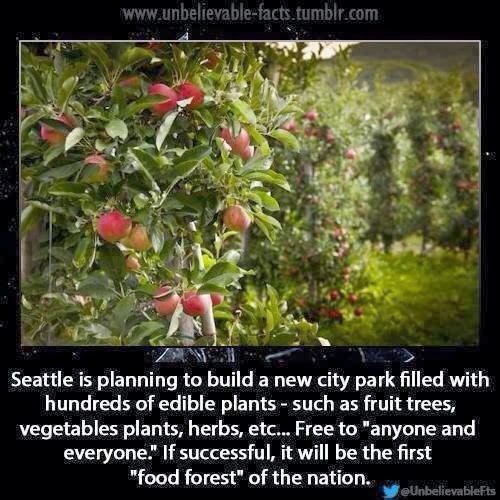
This is happening.  Imagine having a forest full of fruit trees.

Monday, 18 March 2013

Wind up radio (without battery)

Provision of wind up radio in villages

Are you the first or want to be first corporate to make a village communication proof without electricity or batteries.


There was a time when people thought radio is outdated but it thriving because of FM band.  It is still most economical and reliable medium of communication, entertainment and education particularly in far flung rural villages.  

The two constraints are the availability, accessibility and affordability of electricity or the batteries, particularly during the period of natural calamities.  That brings back the focus on the human power used for such a long time in running mechanical watches.  The same concept is now available and used successfully.

Wind up radios are excellent example of eco friendly technology and have continued to be popular ever since Trevor Baylis invented them.  Now different companies are producing their own versions of the wind-up radio. 

In 1993, Trevor watched a program about the spread of AIDS in Africa, which observed that in many regions radio was the only available means of communication, but the need for batteries or electricity made them too expensive or too difficult to access. There was a need for an educational tool that did not rely on electricity.     In his workshop at home he experimented with a hand brace, an electric motor and a small radio. He found that the brace turning a the motor would act as a generator that would supply sufficient electricity to power the radio. The addition of a clockwork mechanism meant that a spring could be wound up and that as the spring unwound the radio would play. His first working prototype ran for 14 minutes on a two minute wind. Trevor had invented a clockwork (windup) radio!     In 1997, the new generation Freeplay Radio 2 rolled off the production line in South Africa. Smaller and lighter than the original model, the new radio would run for up to an hour with a thirty second wind. 


Wind up radio benefits the environment, never run out of power, no throw away batteries to replace and is powered by you.  It meets the need of communication during natural calamities/ power breakdowns


Monday, 28 January 2013

Community radio


A CSR wish - Transform one village into in an open interactive society

Recently, I saw an advertisement with heading Let the world hear the voices of unheard communities - start a community radio station.  First reaction was whether a radio is relevant today when so many alternative and attractive media are available.  I recollected the scenes from the film "Lage Raho Munna Bhai" where instant advice is given on a phone-in radio program saving a life. Could it have been more effective on any other media.  The power of radio remain unbeatable as the most effective communication media in far flung remote areas including those area where there is no electricity or during natural calamities.

On the other side it gives unique opportunity for communities to share their views, showcase their talent.  More so for the women and children.  It is one of the best media for spreading the awareness about social issues like education, health and hygiene, sanitation, the government programs and schemes.  It will also be helpful to business in sharing information about their industry and their CSR activities.

The radio station is to be operated by an NGO.  It could be one of the NGO formed by local community or for the local community by the ladies or employees of the business or by the business.  The details of the scheme are available at http://www.cronlineindia.net

Please share your views, comments, ideas and experiences.

Wednesday, 23 January 2013

Need for reinventing CSR

One may say that there are as many concepts of social responsibility as the number of people on the earth because each person is individual and different.  But corporation are not human being, do not have emotions, religion or limited life  span and do not have to give account of their life after life is over.  Corporate are eternal legal entity.  Therefore, the concept of social responsibility for corporate has to be only one and different from the concept applicable to human being.  The corporate social responsibility have ever been evolving based on the responses of the consumer, NGO, media and public opinion at large.

There is no dearth of information about CSR and what corporation do under CSR.  What about innovation in CSR or the frugal innovation in CSR? How many corporate can say that they were the first in introducing a new concept or activity under CSR which changed the lives of its stakeholder or the targeted community.  Remember, only those are remembered who were the first in achieving a milestone, however frugal it may be.

I will be sharing new ideas which make the corporate to be the first in achieving a new milestone in CSR.

Please share your views, comments, ideas and experience.